
"arabica botany"
200 article(s) found

Characteristics of Mexican Coffee Flavor and Taste introduction to the method of Variety treatment in Grinding and Calibration areas
Mexican coffee flavor characteristics grinding scale regional variety treatment method Mexican people are optimistic and enthusiastic. It can also be seen from their coffee that the mellow Mexican coffee is not only loved by the native people, but also praised by many coffee connoisseurs. There are many ways to taste Mexican coffee, mainly divided into alcoholic and non-alcoholic

Panama Coffee Estate Hartmann Red Wine Treatment Introduction to Red Wine Treatment
Professional barista communication, please pay attention to coffee workshop (Weixin Official Accounts cafe_style ) Panama Hartmann Estate Red Wine Treatment Panama Hartmann Estate Natural dried longan, fermented longan, blackberry, brown sugar sweet, Body full and sticky. When it comes to Panama's coffee tradition, most of the more familiar fine coffee producing areas come from Boquet, but in recent years, Vulcan (
Is Robusta coffee a boutique coffee bean? Why are Luodou so cheap? How much half a kilo
Coffee is divided into three varieties, Arabica, Robusta and Liberika. Among them, only Arabica and Robusta are of commercial value. In the boutique coffee circle, few people mention Robusta coffee beans. In daily life, we often see that our coffee beans are 100% Arabica coffee.

How much coffee does the coffee tree produce in a year?
At present, the most important coffee beans in the world come from Arabica, Robasta and Liberia. these three varieties of coffee beans are the three original species of coffee trees, and the quality of coffee beans produced by other coffee trees is also higher than that of other coffee trees. Arabica Coffee Tree, which originated in Ethiopia, accounts for 70% of the world's coffee production, and is a world-famous coffee product.

An introduction to the Culture of Coffee the origin of the legend the brewing mode of fine coffee
Africa is the hometown of coffee. Coffee trees are probably the coffee culture found in Ethiopia's KAFFA province. Later, batches of slaves were sold from Africa to Yemen and the Arabian Peninsula, and coffee was taken everywhere along the way. To be sure, Yemen started growing coffee in the 15th century or earlier. Although Arab

Introduction to Coffee Culture Coffee Collection
Africa is the hometown of coffee. Coffee trees are probably the coffee culture found in Ethiopia's KAFFA province. Later, batches of slaves were sold from Africa to Yemen and the Arabian Peninsula, and coffee was taken everywhere along the way. To be sure, Yemen started growing coffee in the 15th century or earlier. Although the Arabs had at that time

Coffee bean subspecies is a variety of coffee beans that you have heard of but do not know, Kaddura coffee beans are slightly inferior?
Professional coffee knowledge exchange more coffee bean information please follow the coffee workshop (Wechat official account cafe_style) front street-coffee bean subspecies, Kaddura coffee varieties introduce coffee trees belong to the botanical angiosperm phylum, dicotyledonous class, Rubiaceae, Rubiaceae coffee genus. It's very talkative! There are about 70 tree species in the genus Coffee, but only two are available at present.
Is Rwandan coffee suitable for washing? how does Rwandan coffee taste?
Later, batches of slaves were sold from Africa to Yemen and the Arabian Peninsula, and coffee was taken everywhere along the way. To be sure, Yemen started growing coffee in the 15th century or earlier. Although Arabia had the busiest port city in the world at that time, it banned the export of any seeds. This barrier was finally broken through by the Dutch, and in 1616, they finally

What is the transmission path of coffee? Introduction of basic varieties
A summary of the transmission path of coffee from Ethiopia to Yemen (595-850), Yemen to India and Java (1600), Java to the Netherlands (1706), Netherlands to Paris (1714), Paris to Bourbon (1718) Martinique, Haiti (1723), Mexico, Brazil and other Central and South American countries (1727) last to East Africa (1900). At first, France was the main coffee supplier in Europe.

Introduction of flavor characteristics of Robusta coffee beans introduction of varieties of Robusta coffee beans
Professional coffee knowledge exchange more coffee bean information please follow the coffee workshop (Wechat official account cafe_style) the three major native species are Arabica, Robusta and Liberica (Liberika). Arabica ranks first in production, accounting for about 7075% of the world's coffee. There are bourbon and Emperor.

A Winning Formula for Traditional Espresso: Part
At the center of my 20-plus years of training and knowledge is illycaff. Certainly my views on coffee have been influenced by the companys scientific environment, created by three generations of chemists; a research and development unit co

Costa Rica Coffee Manor Hope Manor introduces the western valley
Hernando Tapasco's team, the lead botanist, set up a climate station on the estate to track weather data and help make harvest decisions. The data on the farm were collected continuously and analyzed once a week. After harvest, they will compare weather data, production data, cup test data, and analyze the correlation. The harvesters of Rose Summer are strictly trained to harvest only the mature ones.

The Development of Coffee Culture Coffee what are the changes in the taste of different varieties of coffee
In China, whether at work or after work or outside the office or home, there is coffee drinking, the quality of life that Chinese people pursue is getting higher and higher, and coffee sales in China are also very high. there are also a lot of cafes, and the main source of coffee is that in the West, at first, Arabs dried coffee beans and boiled them, when drugs were used and then gradually turned into beverages in China's Shennongbai.

The planting conditions, types and methods of coffee. What are the favorable conditions for coffee cultivation?
Professional coffee knowledge exchange more coffee bean information Please pay attention to the planting conditions of coffee in coffee workshop (Wechat official account cafe_style) Coffee can not be grown in any environment, because it was originally a plant growing in the tropical rain forest, in the process of phylogeny, it forms the habit of requiring calm wind, cool, shady or semi-shaded and humid environment. Therefore, coffee has a good effect on planting conditions.

Barista course
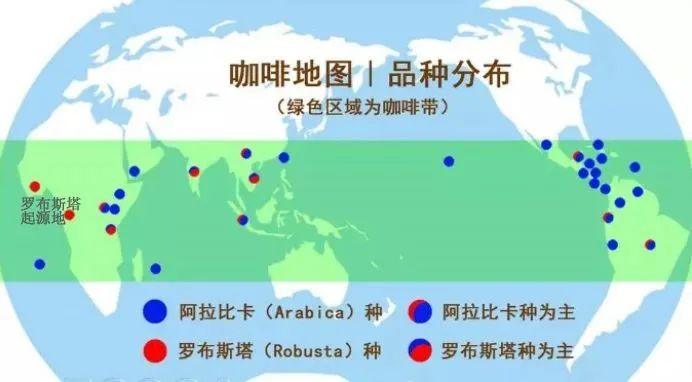
Climate is the decisive factor for coffee cultivation. Coffee trees are only suitable for growing in the tropics or subtropics, so the zone between latitude 25 degrees south and north is generally called

Money doesn't always buy bourbon.
Professional coffee knowledge exchange More coffee bean information Please pay attention to coffee workshop (Weixin Official Accounts cafe_style) The coffee we usually drink, whether from Coffea arabica, Coffea robusta, or the rarer Liberia (Coffea liberica), in botany, is Rubiaceae, coffee species. Coffea
Unveil the mystery of coffee allusions
Who first thought of roasting the seeds of coffee trees? And why?
Introduction to Coffee Tree
The planting and regional distribution of coffee trees, coffee trees belong to the evergreen trees of the subgenus Rubiaceae in botany, while coffee beans, commonly known as coffee beans, are actually the seeds of the fruit of coffee trees, just because they are shaped like beans, so they are called coffee beans.

Why Bourbon Coffee is famous-the Legend of UCC Coffee and Sharp Bourbon Bourbon Pointu
Professional coffee knowledge exchange more coffee bean information please follow the coffee workshop (Wechat official account cafe_style) the coffee we usually drink, whether from the Arabica species (Coffea arabica), Robusta (Coffea robusta), or the rarer Liberia (Coffea liberica), in botany, all belong to the Rubiaceae, coffee genus. Coffee genus

Introduction to the basic knowledge of Fine Coffee
First, the planting and regional distribution of coffee trees. Botanically, coffee trees belong to the subgenus Rubiaceae, but coffee beans, commonly known as coffee beans, are actually the seeds of the fruit of coffee trees, just because they are shaped like beans, so they are called coffee beans. Climate is the decisive factor for coffee cultivation. Coffee trees are only suitable for growing in the tropics or subtropics, so the latitude between south and north is between 25 degrees.